
Small, leaf-eating pests that create light tunnels in plant leaves and can significantly reduce crop yield and quality.
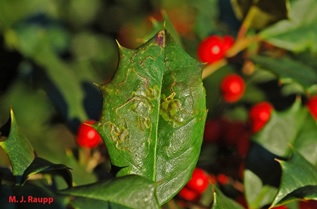
Aphids are a group of tiny insects whose larvae feed inside the leaf tissue. Unlike surface pests, aphids move inside the leaf and cause distinct tunneling marks that are visible to the eye. This pest is very common in vegetable and horticultural greenhouses, and improper management can lead to reduced crop yields and increased control costs.
These symptoms are usually seen first on young leaves, then spread to older leaves.

Mites are most active in the following conditions:
In closed greenhouses with poor ventilation and air circulation, the risk of spreading mealybugs is higher.
The larvae of the pest feed on the leaf parenchyma and create spiral corridors in the leaves due to a severe reduction in the level of photosynthesis and interruption of the sap flow, causing a reduction in the production yield by up to 100%. The insect larvae produce continuous corridors in the leaves and young stems. The corridors are narrow and irregular, with a relatively white or relatively green color or thread-like and black strips of excrement on both sides of the groove. Separate corridors are of little importance, but the feeding damage of the larvae in high pest densities can cause weakening or complete destruction of the mature and young plant. Infected leaves are susceptible to damage from wind and sometimes attacks by plant pathogens. Feeding holes are also created by the female insect’s genitals in the leaf tissue, and eggs are laid in some of these holes. These holes are created on the upper side of the leaf. Feeding holes cause the destruction of a large number of leaf parenchyma cells that can be seen with the naked eye, and oviposition occurs in approximately 15% of them.
Feeding of the female insect, which uses its dagger-shaped ovipositor to create holes in the leaf for feeding or laying eggs, which at high densities reduces the level of photosynthesis.
Feeding of three-instar larvae, where the first-instar larva begins to create a corridor in the plant tissue by feeding on the parenchyma tissue. The diameter of the corridor is small at first, but increases with the age of the larva. The larva can easily rotate in the corridor and attack the plant tissues on all sides. They grind and harvest the leaf cells like a sickle with their mouth hooks. At high densities, the larvae are able to destroy the entire green surface of the leaves.